
Blog
Comparing Macramé Cords: Single Twist, 3-Ply Twisted, and Braided Cord


Macramé is the art of knotting cords into decorative and functional items, and the type of cord you choose significantly impacts your project’s beauty and durability. Three common macramé cords are single twist, 3-ply twisted, and braided cords. Each has distinct characteristics, advantages, and disadvantages suited to different project types. This article provides detailed insights into each type to help you choose the right cord for your handmade macramé creations.
1. Single Twist Cord
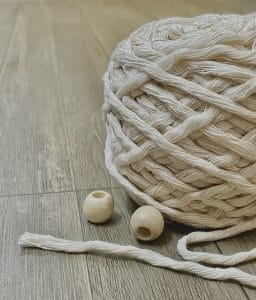
Single twist cords consist of many small cotton threads loosely twisted into a single strand without internal braiding. Due to its loose structure, this cord is exceptionally soft and can easily be combed into straight, smooth fringes, ideal for decorative fringes in macramé projects. Its softness provides a comfortable feel while knotting.
Advantages:
- Soft, easy to knot, and ideal for smooth, straight fringes.
- Creates a naturally soft, boho aesthetic.
Disadvantages:
- Less durable and not suitable for heavy loads.
- Easily frays or unravels during crafting.
- Knots may appear less defined due to softness.
Ideal Projects:
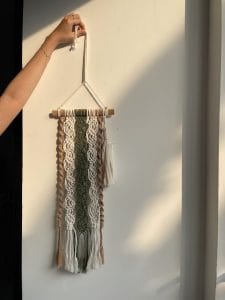
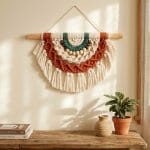
- Wall hangings and decorative curtains with fringes.
- Small decorative items such as macramé feathers, leaves, and tassels.
- Lightweight decorative items like keychains or dreamcatchers.
2. 3-Ply Twisted Cord
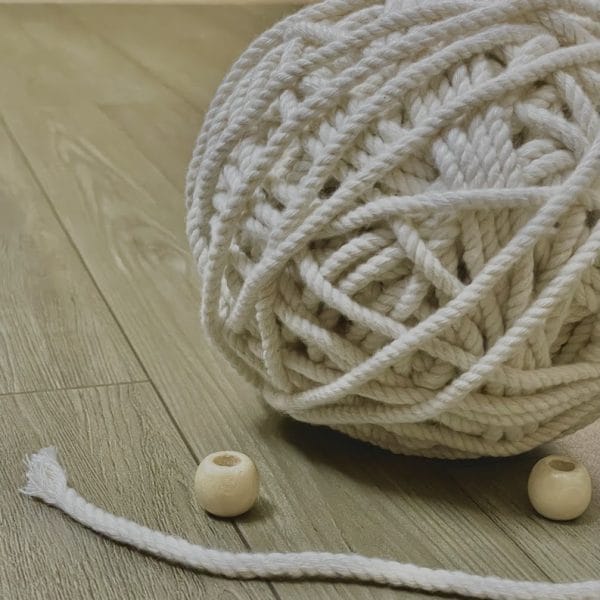
3-ply twisted cord is made of three smaller strands tightly twisted together, providing greater strength and durability than single twist cord. Its twisted texture offers a rustic and vintage look, and when untwisted, it creates wavy, distinctive fringes, adding texture to your projects.
Advantages:
- Higher durability and strength compared to single twist.
- Unique wavy fringes when unraveled, enhancing texture.
- Clearly defined knots and good shape retention.
- Less likely to fray or unravel during crafting.
Disadvantages:
- Fringes are naturally wavy and require effort to straighten.
- Slightly stiff and may cause hand fatigue over prolonged use.
- Twisted texture may affect detailed patterns requiring smooth surfaces.
Ideal Projects:
- Plant hangers, hanging lamps, small hammocks.
- Vintage and rustic-style macramé projects.
- Projects emphasizing distinct textures and knot visibility.
3. Braided Cord
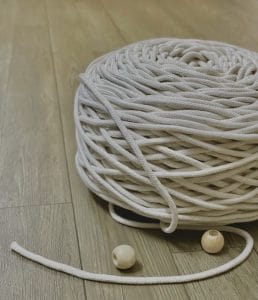
Braided cord is tightly woven from multiple smaller strands into a strong, tubular structure. This cord type is highly durable and resistant to fraying, offering smooth and precise knotting.
Advantages:
- Highest durability and load-bearing capacity among the three.
- Fray-resistant, maintains neatness and form.
- Can be untied and retied multiple times without damage.
- Products have exceptional longevity and structural integrity.
Disadvantages:
- Slightly rigid, making delicate knotting more challenging.
- Higher cost due to complex production and superior quality.
Ideal Projects:
- Heavy-duty projects such as macramé chairs, shelves, large hammocks.
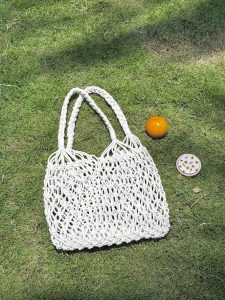
- Everyday-use accessories like bags, phone straps, and belts.
- Projects requiring precise shapes and structural stability like coasters, wall hanging.
Conclusion
Each macramé cord—single twist, 3-ply twisted, and braided—has its specific role in crafting. Single twist offers softness and delicate fringes, 3-ply twisted provides rustic strength and texture, and braided cord delivers unmatched durability and structure. Choosing the correct cord enhances the quality and beauty of your macramé projects.
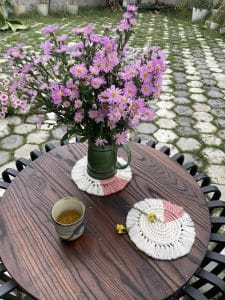
At Macrya, we proudly use braided cords—the highest quality available—to create our macramé products. Our braided cords ensure every item is beautifully durable, meticulously crafted, and offers enduring quality. Trust Macrya for handcrafted macramé, where quality and craftsmanship meet in every knot.
 |  |  |



The website design looks great—clean, user-friendly, and visually appealing! It definitely has the potential to attract more visitors. Maybe adding even more engaging content (like interactive posts, videos, or expert insights) could take it to the next level. Keep up the good work!
This is an interesting overview of different types of macramé cords and their unique characteristics. I appreciate how each type serves a specific purpose, from softness to durability, which can really elevate a project. The single twist cord seems perfect for delicate, decorative fringes, while the braided cord offers strength for more structured designs. I wonder, though, how does the 3-ply twisted cord compare in terms of ease of use for beginners? Also, is there a recommended project type for each cord to maximize its potential? Overall, this is a helpful guide for anyone diving into macramé!
This is a really helpful breakdown of macramé cords! I’ve always wondered which cord to use for different projects, and this clears it up nicely. The single twist cord sounds perfect for softer, decorative pieces, but does it hold up well over time or does it fray easily? The 3-ply twisted cord seems like a great middle ground, but is it trickier to work with due to its rustic texture? And for the braided cord, does its durability make it harder to untie or adjust knots? Have you tried these cords yourself—if so, which one’s your favorite? I’d love to hear your thoughts on this!